

MONOPOLY Match
BeeMatch Ltd
I went into MONOPOLY Match expecting a familiar board-game idea with a quick mobile layer around it, and that is exactly where its appeal sits. This is a free puzzle game from BeeMatch Ltd that gives the Monopoly theme a lighter, more immediate shape. Instead of asking me to commit to a long tabletop session, it works best when I want a compact burst of matching and board-game flavor while waiting for a bus, taking a break, or winding down before bed.
That short-session focus is important. The game is not trying to replace a full Monopoly match with friends, and I would not choose it for deep strategy or a social tabletop experience. I would choose it when I want something easy to understand within moments, pleasant to pick up again later, and familiar enough that I do not need to learn a complicated ruleset first. My overall impression is positive, although the same simplicity that makes it welcoming can also make the long-term experience feel repetitive for players who need constant mechanical variety.
How MONOPOLY Match feels in the first few minutes
The strongest part of the opening experience is its clarity. The puzzle format is approachable, and the Monopoly identity gives the presentation a recognizable personality without requiring me to study a manual. I can start playing with a simple goal in mind, make a few moves, and quickly understand whether the pace suits me. That matters for a mobile game because the best short-session titles do not make the player work through a long explanation before delivering their first satisfying moment.
I also like that the game sits between two familiar categories. It has the visual and thematic pull of a board game, but its practical use is closer to a casual puzzle app. That makes it easier to fit into small gaps in the day than a traditional property-trading session. If I have only a few minutes, I can still get a complete-feeling slice of play rather than opening an experience that demands a long uninterrupted block of attention.
The store listing presents it as a fresh take on Monopoly, but I found the more useful way to understand it is as a relaxed matching game wearing a board-game costume. That distinction helps set expectations. Players looking for the negotiations, money management, and competitive table talk associated with classic Monopoly may find this too streamlined. Players who enjoy matching puzzles and simply want a recognizable theme may find the combination much more comfortable.
Related News






Its broad accessibility is another advantage. The game is marked for Everyone, and it does not present itself as a specialist puzzle aimed at experienced players. I could imagine younger players enjoying the colorful identity, while adults may appreciate the low barrier to entry during a busy day. The important caveat is that an age rating describes suitability, not depth. A game can be easy to approach and still become less interesting to someone who wants demanding planning.
The current release is version 0.3.14794, and the game requires Android 9 or later. That makes checking device compatibility worthwhile before installing, especially if you use an older phone or tablet. On a supported device, the free entry point makes experimentation easy: I do not have to decide in advance that this will become a long-term hobby. I can try its rhythm, see how I feel about the repeated puzzle loop, and keep it only if the short bursts genuinely fit my routine.
The rhythm works best when I treat each visit as a small break
My favorite way to use the game is in deliberately small sessions. I might open it while waiting for an appointment, play through a few puzzle moments, and close it without feeling that I have abandoned a major campaign. That low commitment is a real strength. Many mobile games create pressure to stay active, but this one is easier to approach as a snack rather than a meal.
Gallery
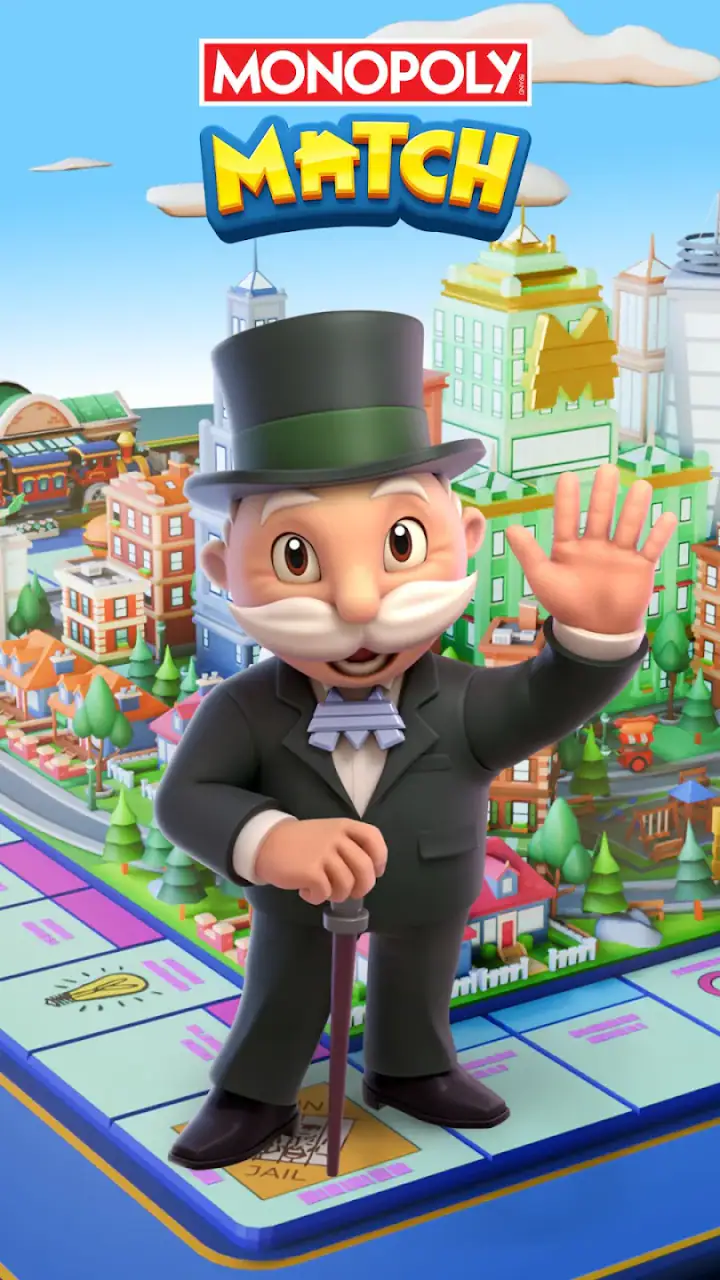
The immediate pleasure comes from the combination of recognition and response. I see the Monopoly-inspired setting, understand the basic visual language quickly, and then focus on making matches. That transition from opening the app to actually playing is more valuable than it sounds. When I am tired, I do not want a complicated menu structure or a demanding strategy layer before the game becomes enjoyable.
There is also a useful mental distinction between a game that is easy and one that is frictionless. MONOPOLY Match is at its best when I want frictionless entertainment, but that does not mean every session feels equally rewarding. If I am alert and looking for a puzzle that forces me to plan several steps ahead, I may want something more demanding. If I am distracted or only half-focused, the accessible format becomes an advantage because I can still enjoy a little progress without giving it my full concentration.
A practical tip is to use it as a transition activity rather than as the main event. I found it better suited to the five-minute gap before dinner than to a dedicated evening of gaming. That approach also reduces the chance of the repeated structure wearing me down. The game can deliver a pleasant lift in a short visit, but asking it to provide hours of uninterrupted novelty is a tougher test.
The free price is helpful here. I can install it without an upfront purchase and make a personal decision based on the feel of the puzzle loop. There are in-app purchases ranging from $0.99 to $99.99 per item, so I would approach optional spending carefully. The sensible way to enjoy it is to decide beforehand whether I am comfortable spending anything at all, rather than letting a sequence of small impulses shape the experience.
Why interruption tolerance matters more than it first appears
For a casual mobile puzzle, the ability to stop and return is almost as important as the puzzle itself. I often play in situations where a notification, conversation, or change of plans can interrupt me without warning. MONOPOLY Match fits that reality better than a game built around long real-time rounds. I do not need to protect a full hour just to make opening the app worthwhile.
This does not mean I would treat it as something to play while doing another task that needs concentration. Matching still requires attention, and distracted choices are rarely satisfying. The better use case is a pause between responsibilities, when I can give the screen a few minutes and then put it away. That makes it a good companion for waiting rooms, commutes when I am seated, or short rests at home.
I also appreciate the psychological ease of returning to a familiar format. I do not have to rebuild a mental model each time I come back. The Monopoly presentation helps the game feel recognizable, while the puzzle structure keeps the restart simple. For me, that makes it more reliable than a complex strategy title that requires remembering a detailed state of play after every break.
Still, players should not confuse easy re-entry with endless freshness. Returning to a game is pleasant when the basic loop remains enjoyable, but the same loop can eventually feel predictable. My recommendation is to keep expectations realistic: this is a title for repeatable casual sessions, not necessarily a constantly evolving challenge that will surprise me every time I open it.
One useful habit is to stop after a satisfying sequence instead of continuing automatically. Ending on a positive moment makes the next visit feel more inviting. It also helps prevent the game from becoming background tapping. The strongest short-session games benefit from restraint, and I think this one is more enjoyable when I choose its stopping point rather than letting the session stretch simply because the next move is available.
The Monopoly theme adds charm, but it does not transform the puzzle
The familiar branding gives the game an immediate identity. I do not need to be a devoted Monopoly player to recognize the kind of atmosphere it is aiming for, and that familiarity makes the experience friendlier than an entirely anonymous puzzle board. It is a smart fit for casual play because the theme can attract someone who might otherwise scroll past another matching game.
At the same time, the theme should not be mistaken for the strategic substance of the original board game. I would not install this expecting property deals, player negotiation, or the long-term financial decisions that define a traditional Monopoly session. The board-game feeling is more about presentation and framing than about recreating the complete tabletop rule set.
That trade-off is actually useful for the intended audience. A faithful digital board-game adaptation can be slow when I only have a few minutes, while this approach gets to the puzzle more quickly. The result is less suitable for a group gathered around one screen, but more suitable for a person playing alone during a short break. In other words, the game borrows Monopoly’s familiarity without inheriting all of its time demands.
I found the theme most effective as a motivation to return. A plain matching board can be pleasant, but a recognizable setting gives small moments of progress a little more context. The limitation is that presentation can only carry repetition so far. Once I have become accustomed to the visual identity, the underlying puzzle decisions need to remain satisfying on their own.
Replay value depends on what you want from a puzzle
Replay value here is less about discovering a completely new game every day and more about having a dependable activity that remains easy to resume. That is enough for some players. I can see the appeal for someone who enjoys familiar routines, likes matching puzzles, and wants a themed app to fill spare minutes without demanding serious commitment.
For me, the question is whether the repeated loop still feels purposeful after the first wave of novelty fades. The opening attraction comes from the Monopoly setting and the straightforward puzzle access. The longer-term test is whether I continue to enjoy making decisions within that structure when the theme no longer feels new. Players who are naturally drawn to score chasing and incremental improvement may get more mileage from it than players who need a story, a changing ruleset, or a strong competitive ladder.
A non-obvious advantage is that the game can serve different levels of attention. I can play casually when I want to relax, but I can also slow down and think more carefully rather than treating every move as automatic. That flexibility gives the puzzle more life than a completely mindless tapper. However, it does not turn the experience into a heavyweight brain-training title. The depth is still bounded by its casual design.
Another trade-off involves spending. Optional purchases may make sense for someone who wants to support the game or accelerate personal progress, but they can also change the feeling of a calm break if I begin measuring every session against what could be bought. I recommend trying the free experience first and deciding whether the basic loop is enjoyable without purchases. If it is not, spending more is unlikely to solve the underlying mismatch.
The game has attracted an average rating of 4.7 from around 16 thousand ratings, with about 2.8 thousand written reviews, and it has passed 100 thousand installs. Those figures suggest that the approachable formula is connecting with a substantial audience, but they do not replace personal testing. A highly rated casual puzzle can still be wrong for someone who dislikes repetition, themed branding, or in-app purchase prompts.
Who will enjoy it, and who should choose something else
I would recommend it to players who want a free puzzle they can understand quickly, pause easily, and revisit without a long warm-up. It is especially suitable for short breaks, casual solo play, and anyone who likes the idea of Monopoly more than the time commitment of playing the full board game. It also makes sense for families looking for an approachable title marked Everyone, provided adults set sensible boundaries around optional purchases.
I would be more cautious about recommending it to someone who wants a serious strategy challenge. If your ideal puzzle involves complex planning, unusual mechanics, or a steadily changing set of rules, this may feel too comfortable. The same applies to players searching for a genuine multiplayer board-game replacement. The Monopoly name may raise that expectation, but the experience is better understood as a solo-friendly matching game with a board-game theme.
Compared with a traditional match-three puzzle, this title has more personality and a clearer visual hook. Compared with a full Monopoly adaptation, it is faster and less demanding but also much less faithful to the tabletop experience. Compared with a minimalist puzzle app, it may feel busier because of its themed presentation. Those differences make the choice fairly simple: pick it for accessible, themed breaks, and look elsewhere for either deep strategy or authentic group play.
My most practical advice is to judge it after several short visits rather than one long first session. The initial familiarity can be appealing, but the real question is whether you still enjoy the decision-making once the novelty settles. If the answer is yes, its low-commitment rhythm can make it an excellent everyday filler. If the answer is no, the game has probably shown you its central limitation clearly enough, and a more mechanically varied puzzle would be a better use of your time.
My casual verdict after living with the loop
MONOPOLY Match succeeds because it understands the value of an immediate, interruption-friendly puzzle. I can open it, get into the action quickly, stop when life demands attention, and return later without feeling lost. The Monopoly identity gives the experience warmth and recognition, while the matching format keeps it approachable for people who do not want a demanding board-game simulation.
Its weaknesses are closely connected to its strengths. The simple structure is welcoming, but players who need deep strategy may outgrow it. The repeatable rhythm is convenient, but it can become familiar rather than exciting. The free download lowers the risk of trying it, while the range of optional purchase prices means I would still play with a clear spending limit.
For my own use, I would keep it as a short-break game rather than a primary gaming destination. It is at its best when I want a few minutes of colorful puzzle play with a recognizable theme and no heavy commitment. If that sounds like your kind of mobile entertainment, BeeMatch Ltd has made a sensible, easy-to-return-to option. If you are looking for the full strategic or social character of Monopoly, or for a puzzle that constantly reinvents itself, I would choose a different game instead.
FAQs for MONOPOLY Match
What is MONOPOLY Match and how do you play it?
MONOPOLY Match is a match-3 puzzle game inspired by the classic MONOPOLY board game. You swap or match colorful tiles to complete levels, earn rewards, and progress through themed locations based on the MONOPOLY universe. The game also includes familiar characters, property-building elements, events, and collectible content, giving the standard puzzle format a more recognizable board-game personality.
Is MONOPOLY Match free to download and play?
Yes, MONOPOLY Match can be downloaded and played for free on supported Android and iOS devices. However, it uses optional in-app purchases for items such as extra lives, boosters, coins, or special bundles. Progress is possible without spending money, but some players may find the difficulty, limited lives, and timed events encourage purchases, especially when trying to continue a difficult level.
Does MONOPOLY Match require an internet connection?
An internet connection is generally recommended, and some features may require the game to be online. Online access can be necessary for events, advertisements, account synchronization, updates, purchases, and certain reward systems. Although parts of the match-3 gameplay may work temporarily without a connection, offline availability can be limited and progress may not synchronize correctly until you reconnect.
Are there ads or in-app purchases in MONOPOLY Match?
MONOPOLY Match includes advertising and optional in-app purchases. Ads may appear as regular advertisements or as optional videos that provide extra rewards, such as additional moves, coins, or other useful items. Purchases can speed up progress or provide more resources, but they are not strictly required. Parents should review device purchase settings if children may access the game.
Is MONOPOLY Match suitable for children and casual players?
MONOPOLY Match is easy to understand and suitable for casual players who enjoy colorful match-3 puzzles, short sessions, and familiar MONOPOLY themes. Later stages can become more challenging, and the game’s energy systems, advertisements, events, and purchase offers may not appeal to everyone. Parents should also check the current age rating, privacy information, and in-app purchase controls before allowing children to play.
Pros
- Fun match-3 gameplay mixed with familiar MONOPOLY characters and locations.
- Short levels make it easy to play during quick breaks.
- Regular events provide extra goals beyond the main level progression.
- Colorful graphics and lively animations give the game a polished feel.
- Power-ups can help clear difficult boards when used strategically.
Cons
- Some levels become highly dependent on luck rather than careful planning.
- Energy limits may interrupt play when you are on a winning streak.
- Later stages can feel repetitive despite the changing board layouts.
- Frequent offers and prompts may distract from the core gameplay.
- Progress can feel slow without spending resources on boosters or items.


